
Gaming Beyond the Ordinary: Exploring the World of Unique and Innovative Games
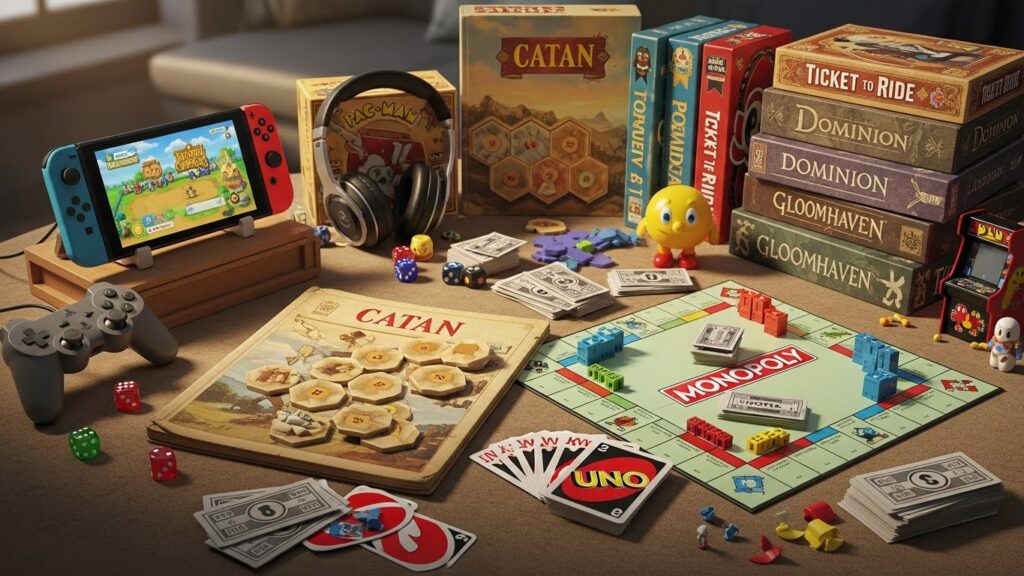
Gaming has evolved tremendously over the past few decades. From the pixelated screens of the 1980s to the hyper-realistic virtual worlds of today, games have become more than just a pastime—they are a form of art, storytelling, and innovation. While mainstream titles dominate the industry, there exists a fascinating world of games that defy conventional norms. These games captivate players not just with their graphics or combat systems but with creativity, mechanics, and experiences that leave a lasting impression. In this blog, we will dive into the realm of unique games, exploring what makes them special and why they deserve attention.
The Appeal of Unique Games
Unique games are often defined by their departure from standard genres or gameplay mechanics. Unlike mainstream games, which may focus on competitive multiplayer or formulaic storytelling, unique games often experiment with perspective, narrative, and interaction. They challenge players to think differently, approach problems creatively, and engage in experiences that traditional games might not offer.
One of the main appeals of unique games is their ability to evoke emotions in unconventional ways. While a typical action game might rely on adrenaline-pumping sequences, a unique game might create tension through silence, isolation, or environmental storytelling. These experiences often linger in the mind long after the player has set down the controller.
Innovative Game Mechanics
At the core of many unique games are innovative mechanics that break away from traditional gameplay loops. Consider games where time manipulation is the central mechanic. Instead of simply running and jumping, players must navigate puzzles by reversing, slowing, or accelerating time. These mechanics not only create fresh challenges but also encourage players to experiment and explore the game world in non-linear ways.
Another example is games that use unconventional input methods. Some games rely on voice commands, motion controls, or even gestures to progress. These mechanics make the gaming experience more immersive and can bridge the gap between player and game world. By rethinking how players interact with a game, developers create experiences that feel entirely new.
Narrative-Driven Uniqueness
Storytelling is another area where games can truly stand out. While many games follow the hero’s journey or linear plots, unique games often experiment with non-linear narratives, multiple perspectives, or player-driven storylines. In these games, choices matter in subtle and complex ways, shaping not just the ending but the journey itself.
Some games employ environmental storytelling, where the story is revealed through the world itself rather than dialogue or cutscenes. Players might uncover notes, symbols, or changes in the environment that hint at a larger narrative. This form of storytelling creates a sense of discovery and makes the world feel alive and immersive.
Artistic Expression in Gaming
Artistry in games is no longer limited to visual design. Unique games often use art, sound, and interactivity as integral components of the experience. Some games employ hand-drawn visuals, abstract worlds, or minimalist designs that defy expectations. Others use soundscapes and music not just as background elements but as tools for gameplay, guiding players through puzzles or enhancing emotional impact.
The combination of visual and auditory creativity allows games to evoke moods and emotions that are difficult to achieve in other media. Players are not just observers; they are participants in an artistic journey, engaging with the game as a living, breathing entity.
The Role of Indie Developers
Indie developers play a crucial role in bringing unique games to life. Without the constraints of large studio budgets or corporate expectations, indie creators are free to experiment with unconventional ideas. This freedom often leads to some of the most memorable and innovative games in the industry.
Indie games are also more likely to take creative risks, blending genres or introducing mechanics that larger studios might consider too niche or risky. Many unique games that have gained cult followings started as small projects developed by passionate individuals or small teams. These developers remind us that gaming is not just about commercial success—it is also about creativity, experimentation, and pushing boundaries.
Examples of Unique Game Experiences
To better understand what makes a game unique, it is helpful to look at some examples. While mainstream games often dominate sales charts, unique games tend to gain recognition for their innovation and emotional impact.
One notable example is games that focus entirely on exploration and discovery, without combat or traditional objectives. Players may wander through beautifully crafted worlds, solving environmental puzzles or uncovering hidden stories. The absence of pressure or linear goals allows for a meditative, reflective experience that is rare in conventional gaming.
Another example is narrative-driven games that explore complex social or psychological themes. These games might challenge players to make morally ambiguous decisions, confront personal biases, or empathize with perspectives vastly different from their own. By engaging players on an emotional and intellectual level, such games elevate gaming from mere entertainment to a medium for introspection and empathy.
Multiplayer and Social Experimentation
Unique games are not confined to single-player experiences. Some multiplayer games experiment with social dynamics, cooperation, and competition in unusual ways. For instance, certain games remove traditional objectives and instead encourage players to create their own goals, fostering creativity and collaboration.
Other games introduce mechanics that manipulate communication, trust, or alliances, creating unpredictable and emergent gameplay. These experiences are often memorable because they combine gameplay with social interaction, leading to stories that are both personal and collective.
Educational and Thought-Provoking Games
Games have tremendous potential as tools for education and social awareness. Unique educational games go beyond rote learning, integrating lessons into gameplay that is engaging, interactive, and challenging. Players might learn about history, science, or culture while solving puzzles or exploring worlds.
Some games also tackle pressing social or ethical issues, encouraging players to think critically about real-world problems. By presenting these topics in an interactive format, games can foster empathy, reflection, and awareness in ways that traditional media often cannot.
Challenges of Creating Unique Games
While unique games are celebrated for their creativity, they also face significant challenges. Breaking from established norms can be risky, as players may be hesitant to embrace unfamiliar mechanics or narratives. Marketing and distribution can also be difficult, as unconventional games often lack the immediate appeal of mainstream titles.
Moreover, creating a unique game requires a delicate balance between innovation and accessibility. A game that is too abstract or complex may alienate players, while a game that is too simplistic might fail to deliver a memorable experience. Successful unique games often find a middle ground, offering fresh ideas while maintaining intuitive gameplay.
The Future of Unique Gaming
The future of gaming is promising for those seeking unique experiences. Advances in technology, such as virtual reality, augmented reality, and artificial intelligence, provide developers with new tools to experiment and create immersive worlds. These technologies allow for unprecedented levels of interaction, personalization, and emotional impact.
As gaming continues to grow as a cultural and artistic medium, unique games will likely play a central role in defining its evolution. They push the boundaries of what is possible, inspiring both players and developers to think beyond conventional limits.
Conclusion
Unique games remind us that gaming is not just about entertainment—it is about creativity, exploration, and human connection. By breaking away from traditional genres, experimenting with mechanics, and telling compelling stories, these games offer experiences that linger in our minds and hearts. Whether you are a casual player or a dedicated gamer, exploring unique games opens the door to worlds you never imagined, challenges your perceptions, and enriches your appreciation of the art of gaming.
In a world where gaming often follows trends and formulas, unique games stand as a testament to innovation, passion, and the limitless potential of imagination. They encourage us to see games not just as a pastime, but as a canvas for creativity and a medium for unforgettable experiences.


