
The Dynamic World of Gaming: From Pixelated Beginnings to Virtual Realities
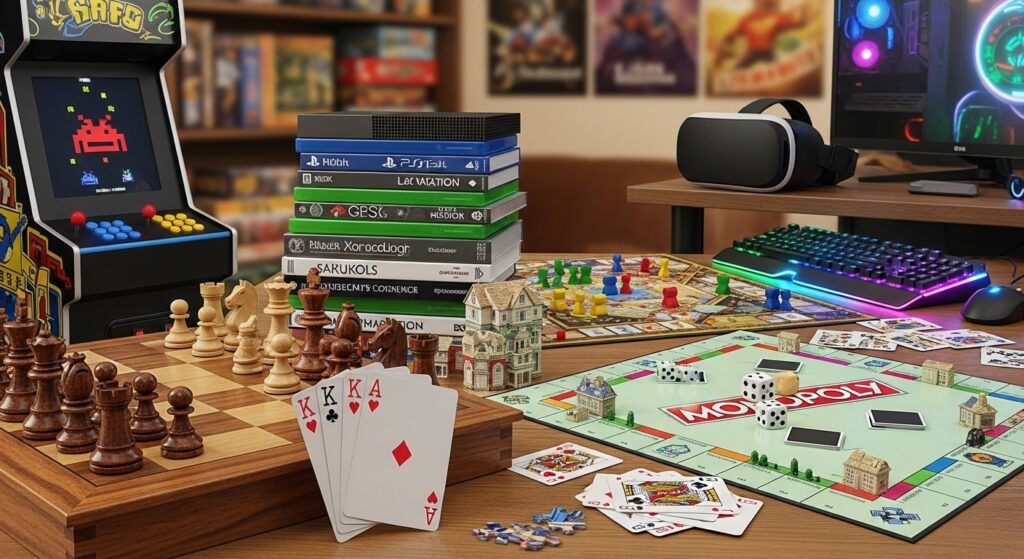
Gaming has come a long way since the days of simple arcade machines. What started as a niche hobby has now blossomed into one of the largest industries in the world, encompassing everything from immersive role-playing adventures to competitive esports tournaments that draw millions of viewers. The gaming landscape continues to evolve, with new technologies and trends emerging every year. But how did we get here, and where is gaming headed in the future?
This blog post explores the fascinating history of gaming, its rapid evolution, the rise of new genres, and what the future holds for this ever-expanding medium. Whether you’re a seasoned gamer or just getting started, understanding the journey of games and their place in society offers a new perspective on this dynamic world.
The Origins of Gaming: Simple Pixels, Endless Possibilities
The Arcade Revolution
The history of gaming began in the early 1970s, with the introduction of arcade machines. The most iconic and widely recognized of the early games was Pong, created by Atari founder Nolan Bushnell in 1972. It was a simple table-tennis simulation, but it introduced a whole new way for people to interact with entertainment. Players were no longer passive consumers of media but active participants in an evolving digital experience.
The arcade was the birthplace of competitive gaming. As arcade machines began to multiply across the world, games like Space Invaders and Pac-Man captured the public’s imagination. These games became cultural phenomena, with players seeking high scores, participating in tournaments, and socializing in these public gaming spaces.
The Home Console Revolution
While arcades dominated the 70s and early 80s, the 1980s marked the transition to home gaming. The Atari 2600, released in 1977, was one of the first consoles that allowed players to bring the arcade experience into their living rooms. This revolutionized gaming, making it more accessible and creating a new generation of players.
However, it was the release of the Nintendo Entertainment System (NES) in 1985 that truly solidified home gaming as a cultural staple. Games like Super Mario Bros., The Legend of Zelda, and Metroid helped define an era, blending action, adventure, and storytelling in ways never seen before. The success of the NES also gave birth to iconic gaming franchises that continue to captivate players today.
The 3D Era: A New Dimension in Gaming
The Introduction of 3D Graphics
In the 1990s, gaming underwent another significant transformation with the advent of 3D graphics. The release of the Sony PlayStation in 1994 and the Nintendo 64 in 1996 marked the beginning of a new era. These consoles allowed developers to create fully 3D worlds that players could explore and interact with from multiple angles, adding a sense of depth and realism that had never been possible with 2D games.
Super Mario 64, one of the flagship titles for the Nintendo 64, is often credited as one of the most influential games in history. It was the first true 3D platformer and introduced players to the concept of open-world exploration within a 3D environment. The game’s groundbreaking mechanics and level design set the standard for future 3D games and influenced generations of game developers.
Other titles such as Final Fantasy VII and The Legend of Zelda: Ocarina of Time further pushed the boundaries of 3D gaming, combining breathtaking graphics with deep storytelling. These games marked a turning point, where video games began to be seen not only as entertainment but also as an art form capable of delivering complex narratives and emotional experiences.
The Rise of Online Gaming
The late 1990s and early 2000s saw the rise of online gaming, opening up new ways for players to connect and interact with each other. The launch of Diablo II in 2000 and EverQuest in 1999 introduced players to the world of massively multiplayer online role-playing games (MMORPGs). These games allowed thousands of players to coexist in shared virtual worlds, creating online communities that could communicate and collaborate to complete quests and defeat enemies.
The introduction of broadband internet in the early 2000s further accelerated the growth of online gaming. Games like World of Warcraft, Counter-Strike, and Halo 2 became cultural touchstones, offering players an unprecedented level of interaction. Online multiplayer gaming also paved the way for competitive gaming, or esports, which would go on to become a global phenomenon.
The Rise of Mobile Gaming: Bringing Games to Your Pocket
Gaming on the Go
With the advent of smartphones, gaming was no longer confined to the home or arcade. In the late 2000s, mobile gaming began to take off, with casual games like Angry Birds and FarmVille becoming global sensations. These games were designed for quick, bite-sized sessions that could be played anywhere, making gaming more accessible than ever before.
Mobile gaming’s appeal lay in its simplicity and accessibility. With millions of people already owning smartphones, it was easy for developers to reach a massive audience. These games required little more than a few taps or swipes on a touchscreen, making them ideal for casual gamers who wanted a fun and quick diversion. As smartphones continued to evolve, mobile games became increasingly sophisticated, offering deeper experiences and more complex gameplay.
The Rise of Free-to-Play Games
One of the most significant trends in mobile gaming has been the rise of free-to-play (F2P) games. Instead of paying upfront for a game, players could now download games for free and then purchase in-game items, skins, or other content. This model quickly became the dominant business model in the industry, especially for mobile games.
Games like Clash of Clans, Candy Crush Saga, and PUBG Mobile exemplified this trend, allowing players to enjoy the core game without spending money while offering optional purchases to enhance their experience. While some critics argue that this model leads to “pay-to-win” mechanics, it has nonetheless revolutionized how games are monetized and has played a key role in the massive growth of mobile gaming.
The Age of Virtual Reality and Augmented Reality
Virtual Reality: Stepping into New Worlds
As technology advanced, virtual reality (VR) emerged as a promising new frontier for gaming. In 2016, the release of devices like the Oculus Rift and HTC Vive brought VR gaming into the mainstream. These headsets allow players to experience fully immersive 3D worlds, where they can move around and interact with the environment in ways that were previously unimaginable.
VR has the potential to redefine gaming, offering experiences that are more interactive and physically engaging. Games like Beat Saber, Half-Life: Alyx, and The Walking Dead: Saints & Sinners have demonstrated the incredible potential of VR, offering players a level of immersion that no other medium can match.
However, while VR has certainly made waves in the gaming industry, it is still a relatively niche market. The cost of VR hardware, the need for powerful computers, and the limited library of VR games have slowed its widespread adoption. However, as technology improves and becomes more affordable, it’s likely that VR will become a more integral part of the gaming experience.
Augmented Reality: Blurring the Line Between the Real and Virtual
In addition to VR, augmented reality (AR) has also emerged as an exciting new form of gaming. Unlike VR, which immerses players in a fully digital world, AR blends the virtual with the real world. One of the most notable examples of AR gaming is Pokémon GO, which took the world by storm in 2016. The game allowed players to find and catch virtual Pokémon in real-world locations using their smartphone’s camera and GPS.
AR has enormous potential in gaming because it creates new ways for players to interact with both the physical and digital worlds. Future AR games could incorporate real-time data, use real-world environments as dynamic game worlds, and offer experiences that adapt to a player’s physical surroundings.
Esports: The Competitive Gaming Phenomenon
The Rise of Competitive Gaming
Esports, or competitive video gaming, has exploded in popularity over the past decade. What was once a small, niche hobby has now become a global industry worth billions of dollars. Major games like League of Legends, Dota 2, Counter-Strike: Global Offensive, and Fortnite have become staples of the esports scene, with professional players, teams, and organizations competing for massive cash prizes.
Tournaments like The International (for Dota 2) and the League of Legends World Championship attract millions of viewers, both in person and online. Esports has even made its way into traditional sports venues, with some tournaments held in arenas that rival the size and scale of major sports events.
The Future of Esports
The future of esports is incredibly bright. As more traditional sports organizations, investors, and media companies get involved, esports is becoming more mainstream. College and high school esports leagues are also on the rise, further cementing competitive gaming as a serious career path for young players.
Esports has also begun to attract more mainstream attention from advertisers and brands, with big-name sponsors and broadcasters like ESPN and TBS now covering major esports events. As the industry grows, it’s likely that esports will become as recognized and respected as traditional sports, with professional leagues and a steady stream of talent emerging from all corners of the globe.
The Future of Gaming: What’s Next?
The future of gaming is filled with endless possibilities. As technology continues to evolve, so will the gaming experience. From virtual reality and augmented reality to artificial intelligence and cloud gaming, the landscape of gaming is set to change in ways we can’t yet fully predict.
Cloud gaming, for example, promises to make high-quality gaming accessible to anyone with an internet connection, eliminating the need for expensive hardware. Artificial intelligence could make games more dynamic and unpredictable, creating richer, more challenging experiences. And as the gaming community continues to grow, we can expect even more diverse voices, genres, and stories to emerge in the gaming world.
One thing is certain: gaming is far from stagnant. It’s a constantly evolving medium, one that continues to push the boundaries of what’s possible in entertainment. Whether you’re a lifelong gamer or just starting, there’s never been a more exciting time to be part of the gaming world. The future looks bright, and the next chapter in the evolution of gaming is just beginning.


