
The World of Games: From Leisure to Global Phenomenon
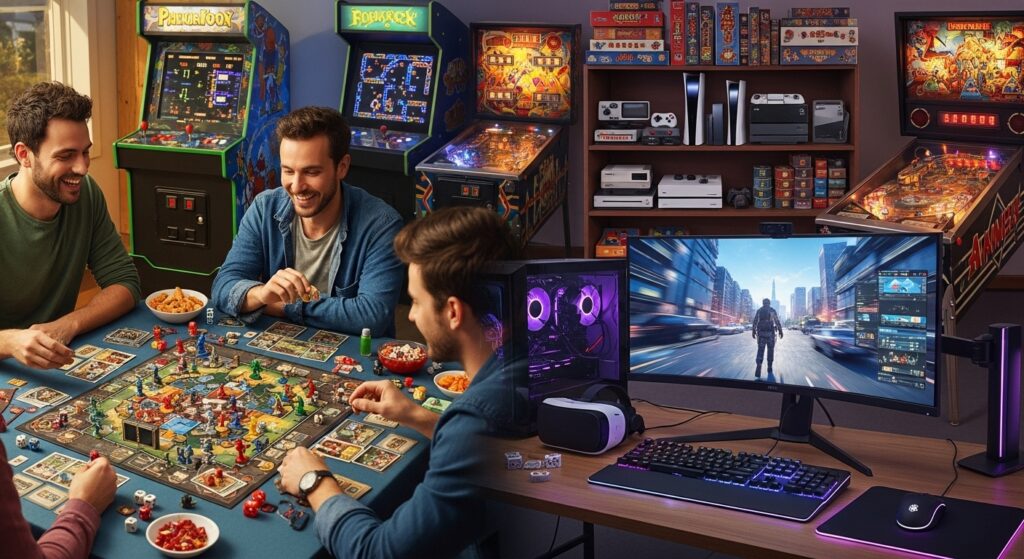
Games have been an integral part of human culture for centuries, evolving from simple activities meant for entertainment into massive global industries that shape cultures and economies. Whether they are board games, video games, or sports, games have the power to unite people, challenge their skills, and even push the boundaries of technology. This blog explores the diverse world of games, examining how they have evolved and why they continue to capture the imaginations of millions.
The Origins of Games: A Timeless Tradition
Games have existed for as long as human civilization. From ancient board games like chess and Go to physical games that required no equipment, early humans used games as a form of entertainment, social interaction, and education. These games were often simple, yet they helped foster community, strategic thinking, and even diplomacy.
The oldest known game, the Royal Game of Ur, dates back to around 2600 BCE in Mesopotamia. Games like these were not just pastimes; they were tools for intellectual development and social bonding. Similarly, many ancient cultures used games for spiritual purposes, believing that they could communicate with gods or foretell the future through them. Over time, these early games laid the foundation for the diverse range of gaming experiences we enjoy today.
The Birth of Modern Games
While ancient games were mainly social or strategic, the modern gaming world took a more structured and competitive shape with the invention of board games in the 19th century. Games like Monopoly, Scrabble, and Risk introduced a new level of complexity and strategy to leisure activities. These games were designed to be played in the comfort of one’s home and quickly became popular across families and social gatherings.
The 20th century brought an even greater revolution with the advent of video games. In 1958, the first-ever video game, Tennis for Two, was created on an oscilloscope. This early experiment was followed by the creation of arcade games like Pong, which gave birth to an entire industry. The 1980s saw the rise of home gaming consoles, including the Nintendo Entertainment System (NES) and Sega Genesis, leading to the expansion of gaming beyond the arcade and into living rooms across the world.
The Golden Age of Video Games
The 1990s marked the “Golden Age” of video gaming, a time when technology and creativity merged to create some of the most iconic video games in history. The launch of powerful gaming consoles like the Sony PlayStation and Nintendo 64 introduced 3D graphics and more complex gameplay mechanics. Classic games like Super Mario 64, The Legend of Zelda: Ocarina of Time, and Final Fantasy VII are still considered benchmarks in the gaming industry due to their groundbreaking storytelling, gameplay, and graphics.
The 1990s also saw the rise of online multiplayer gaming, allowing players to connect with each other across vast distances. Titles like Warcraft and Quake brought gamers together in virtual worlds, laying the groundwork for the massive online gaming communities we see today.
The Rise of Online and Mobile Gaming
In the 2000s, gaming began to shift toward the digital age, with online gaming and mobile gaming becoming increasingly popular. The introduction of broadband internet connections and advanced multiplayer technologies allowed players to connect to one another in real-time, creating a more immersive and interactive experience.
The launch of platforms like Steam revolutionized PC gaming by allowing developers to distribute their games digitally, bypassing traditional retail methods. This shift not only changed how games were sold but also opened up opportunities for indie developers to reach a global audience without the backing of major publishers.
Simultaneously, mobile gaming exploded with the release of smartphones and tablets. Games like Angry Birds, Candy Crush, and Pokémon GO captured the attention of millions, making gaming more accessible to casual players. Mobile gaming’s success is partially due to its accessibility—people can play games on the go, from their daily commute to waiting in line at the store.
The Emergence of Esports: Gaming as a Spectator Sport
As gaming grew, so did its competitive side. Esports, or competitive gaming, began to emerge as a legitimate form of entertainment. With tournaments offering large cash prizes, professional players, and a growing fanbase, esports has now become one of the fastest-growing sectors in the entertainment industry.
Games like League of Legends, Dota 2, and Counter-Strike: Global Offensive have turned into global phenomena, with millions of fans tuning in to watch tournaments and events online or at stadiums. Streaming platforms like Twitch have allowed fans to follow their favorite players, learn new strategies, and interact with gaming communities.
Esports has created a unique intersection between gaming, competition, and entertainment. Professional gamers now have the opportunity to make careers out of their passion, and esports has become a viable career path for those with the skill and determination to succeed.
The Social Impact of Games
One of the most significant changes in the gaming world over the past few decades is the way games have brought people together. What was once seen as a solitary hobby has transformed into a global social activity. Online multiplayer games like Fortnite, Minecraft, and Call of Duty allow players to connect with others worldwide, forming friendships and communities.
Games also serve as a platform for self-expression, creativity, and even activism. Minecraft allows players to build and design their own worlds, and games like Animal Crossing: New Horizons foster a sense of belonging in virtual communities. At the same time, video games are increasingly being used to address important social issues, such as mental health, gender identity, and racial equality, sparking meaningful conversations among players.
In a sense, games have become more than just entertainment—they are a way for individuals to engage with others, share their experiences, and collaborate in ways that were previously impossible.
The Future of Gaming: Virtual Reality and Beyond
Looking ahead, the future of gaming seems more exciting than ever, thanks to advancements in technology. Virtual reality (VR) and augmented reality (AR) are two of the most promising innovations that will shape the next generation of games. VR, in particular, offers players the chance to fully immerse themselves in digital worlds, making games more interactive and engaging than ever before.
The rise of AI-driven narratives and procedurally generated worlds is another exciting development. Games are becoming smarter, with dynamic storylines and environments that adapt to player choices and actions. This creates a more personalized gaming experience and could lead to more emotionally engaging stories.
Cloud gaming, where players can stream games without the need for high-end hardware, is also set to revolutionize the industry. With services like Google Stadia and Microsoft’s Xbox Cloud Gaming, players can access high-quality games on almost any device, making gaming more accessible to a broader audience.
Conclusion: The Enduring Appeal of Games
Games have come a long way from their humble origins, evolving into a multi-faceted and highly influential industry that continues to shape culture, technology, and society. Whether it’s the thrill of competition, the joy of creativity, or the sense of community, games offer something for everyone.
As technology continues to advance, the gaming world will only grow more immersive, inclusive, and impactful. What began as simple entertainment has blossomed into a powerful cultural force that has the ability to bring people together, challenge the mind, and inspire the next generation of gamers, developers, and creators.


