
The Evolution of Gaming: From Classic Arcades to Immersive Virtual Worlds
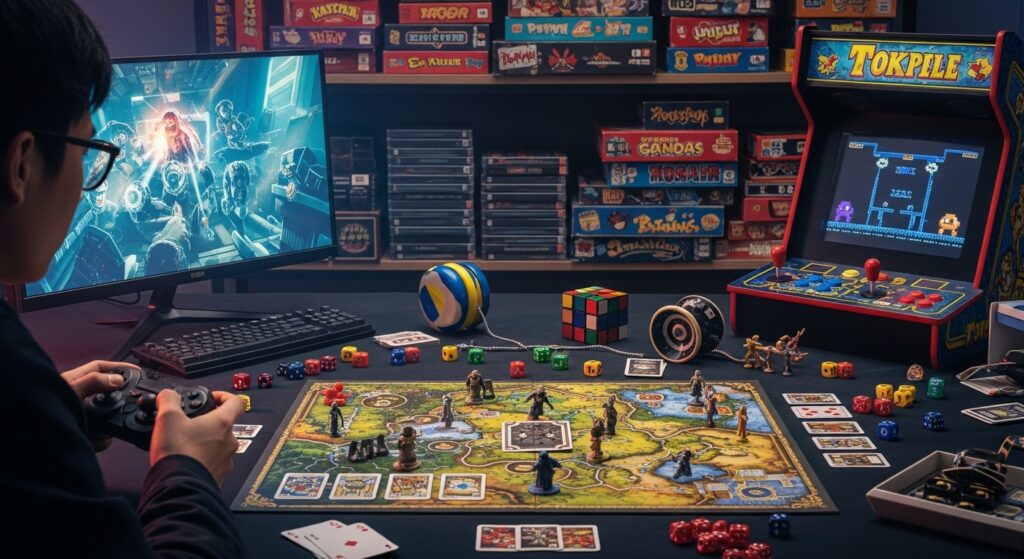
Gaming has come a long way since its inception, evolving into an entertainment juggernaut that attracts millions of players worldwide. Whether you’re reminiscing about the nostalgic days of arcade games or diving into the futuristic world of virtual reality (VR), gaming has continuously pushed the boundaries of technology and creativity. This blog post will take you through the journey of gaming, examining its growth, impact, and the future of this ever-evolving industry.
The Early Days: The Birth of Video Games
The history of video games dates back to the early 1950s, when simple experiments in computer graphics gave birth to the concept of interactive entertainment. The first commercially successful arcade game, Pong (1972), marked the beginning of the video game era. It was a simple yet addictive game where players controlled paddles to bounce a ball back and forth, mimicking table tennis.
The 1980s saw a boom in arcade gaming with titles like Pac-Man, Donkey Kong, and Space Invaders, capturing the attention of gamers across the globe. These early arcade games were often simple in design but packed with fun and challenge, sparking a love for video games that would only grow in the coming decades.
The Rise of Home Consoles
The success of arcade games led to the development of home gaming consoles, allowing players to enjoy their favorite games in the comfort of their own homes. In 1985, Nintendo launched the Nintendo Entertainment System (NES), which became a cornerstone of gaming in the 1980s and 1990s. It introduced iconic titles like Super Mario Bros., The Legend of Zelda, and Metroid, and laid the foundation for modern gaming franchises.
The 1990s also saw the rise of 3D graphics with consoles like the Sony PlayStation and the Nintendo 64. These systems allowed for more complex, immersive games, and with titles such as Final Fantasy VII and Super Mario 64, they pushed the boundaries of storytelling, gameplay mechanics, and visual fidelity. The evolution of consoles led to gaming becoming a mainstream form of entertainment, drawing in players of all ages.
The Explosion of PC Gaming
While consoles dominated the living room, personal computers began to play a pivotal role in the gaming landscape. The 1990s and early 2000s marked the golden age of PC gaming, with games like Warcraft, StarCraft, Doom, and Half-Life setting new standards for graphics, multiplayer experiences, and storytelling. The PC platform’s ability to upgrade hardware and graphics meant that players could enjoy cutting-edge graphics and more complex games than what consoles could offer at the time.
Online gaming became a significant part of the PC gaming experience, with games like World of Warcraft and Counter-Strike attracting large communities of players who could connect via the internet. The rise of online multiplayer games also led to the growth of esports, a competitive form of gaming that would eventually become a billion-dollar industry.
The Mobile Gaming Revolution
In the 2000s, mobile gaming emerged as a dominant force, fueled by the rise of smartphones. The introduction of the iPhone in 2007 revolutionized mobile gaming by providing a portable device with powerful processing capabilities, touch controls, and access to the App Store. Games like Angry Birds and Candy Crush became household names, attracting casual gamers and expanding the reach of gaming to people who had never played on a console or PC before.
Mobile gaming has become a major part of the industry, accounting for a significant portion of global gaming revenue. With millions of free-to-play games available, mobile platforms have made gaming more accessible than ever, offering everything from simple puzzle games to complex role-playing games (RPGs) and competitive multiplayer experiences.
The Era of Online Multiplayer and Social Gaming
Online multiplayer games have reshaped how we experience video games. What began as a niche feature in PC games has now become the cornerstone of many modern titles. Games like Fortnite, Apex Legends, Call of Duty: Warzone, and League of Legends have brought millions of players together from across the globe to compete, cooperate, and socialize in virtual worlds.
The appeal of these games lies in their ability to connect people, making gaming a social experience rather than a solitary one. Whether you’re teaming up with friends to complete a raid or battling strangers in a fast-paced match, online multiplayer games offer an ever-evolving experience with new updates, events, and content that keep players coming back.
The Future of Gaming: Virtual Reality and Beyond
As technology continues to advance, the future of gaming is more exciting than ever before. One of the most significant developments in the gaming world is the rise of virtual reality (VR). VR gaming offers players an immersive experience, allowing them to enter virtual worlds and interact with their surroundings in ways never before possible.
Platforms like the Oculus Rift, HTC Vive, and PlayStation VR have introduced gamers to a new level of immersion, with games like Beat Saber and Half-Life: Alyx showcasing the potential of VR. While the technology is still in its early stages, the possibilities for VR gaming are vast. From fully interactive 3D environments to lifelike graphics and haptic feedback, VR is poised to revolutionize the gaming industry in the coming years.
Augmented reality (AR) is also making its mark on the gaming world. Games like Pokémon GO have already shown the potential of AR by blending the real world with digital elements. Future AR games could lead to more interactive and location-based experiences, allowing players to explore their environments in entirely new ways.
The Impact of Gaming on Culture and Society
Gaming has become a cultural phenomenon, influencing everything from fashion and music to film and literature. With the rise of esports, competitive gaming has garnered the attention of mainstream media, with major tournaments streamed online and broadcast on television. Professional gamers have become celebrities in their own right, with sponsorships, endorsements, and merchandise sales rivaling those of traditional athletes.
Gaming has also had a significant impact on storytelling. Many modern games are known for their rich narratives and character development, offering experiences that rival the best films and books. Titles like The Last of Us, Red Dead Redemption 2, and The Witcher 3: Wild Hunt have pushed the boundaries of what is possible in interactive storytelling, blending cinema-quality visuals with player-driven narratives.
Additionally, gaming communities have become spaces for social interaction and cultural exchange. Online forums, streaming platforms like Twitch, and social media networks have allowed players to connect, share experiences, and build communities around their favorite games.
Conclusion: The Ever-Evolving World of Gaming
From its humble beginnings in arcades to the expansive virtual worlds of today, gaming has evolved into one of the most influential forms of entertainment in the world. The industry continues to grow, with new technologies, genres, and experiences shaping the future of gaming. Whether you’re a casual player or a dedicated gamer, there’s no denying that gaming has become an integral part of modern culture. As we look to the future, one thing is certain—gaming will continue to evolve, and we will be right there, enjoying every step of the journey.


