
The Evolution of Gaming: From Classic Tabletop Fun to Virtual Realities
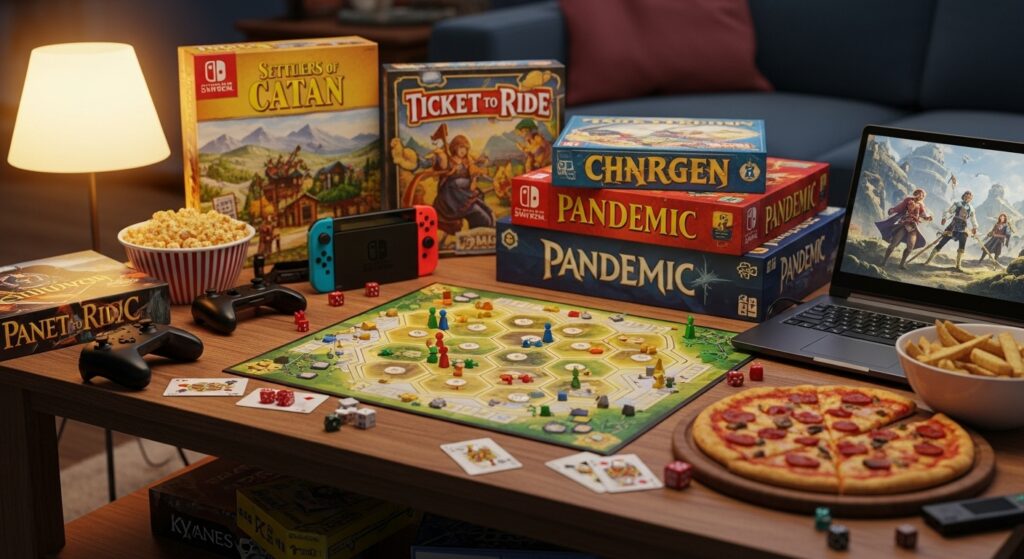
Introduction: A World Built on Play
Games have been a part of human culture for millennia. Whether it’s the roll of dice, the shuffle of cards, or the complex virtual worlds we explore today, the core principle of games remains the same: they allow us to engage in a world of imagination, challenge, and camaraderie. In a constantly changing world, gaming has remained a reliable escape, evolving from simple board games to intricate virtual experiences. This evolution is not just about technological advancements but also about how the role of gaming in society has changed. As we look back and forward, we can see how games have shaped culture, influenced technology, and become a multi-billion-dollar industry in their own right.
Early Beginnings: The Roots of Gaming
The origins of gaming are not just in the digital realm but also in ancient civilizations. Early humans, even before written history, found ways to play. Some of the oldest games, such as Senet from Ancient Egypt, Go from China, and the Royal Game of Ur from Mesopotamia, serve as examples of how games were used to pass time and develop strategic thinking. These games weren’t only for entertainment; they had deep cultural and religious significance. For instance, the game of Go was seen as a way to understand the balance of forces in the universe, while chess originated as a military simulation.
These ancient games laid the foundation for the types of mechanics we would later see in modern video games: strategy, chance, and player interaction. While the technology was primitive, the essence of play was already being shaped. The importance of rules, decision-making, and consequences was being set in stone, even if those “stones” were literally carved out of wood or clay.
The Rise of Board Games: From Social Fun to Strategic Mastery
As civilizations grew and advanced, so did the complexity of games. During the 19th century, the industrial revolution paved the way for mass-produced board games. Games like Monopoly, Scrabble, and Clue became household names. These were not just games to pass the time; they were social events that brought families and friends together around a table, fostering communication, problem-solving, and creativity.
Monopoly, with its representation of capitalist economies, challenged players to think about money, property, and negotiation. Scrabble required a deep understanding of language and the ability to think quickly on your feet. These board games set the stage for modern video games by showing that gameplay could be multifaceted and could evoke different types of thinking, from logic and strategy to creativity and social interaction.
The digital age was fast approaching, but before it arrived, the board game industry helped refine the gaming experience. The foundations for storytelling, competition, and even game design itself were already being laid, all through the tactile, hands-on nature of these games.
The Birth of Digital Gaming: A New Era of Fun and Interaction
The late 20th century ushered in a new era of gaming. The invention of the personal computer and gaming consoles such as the Atari 2600 and the Nintendo Entertainment System (NES) opened the doors to new possibilities. These new platforms allowed players to interact with virtual worlds, creating an immersive experience that tabletop games could never achieve.
The early days of video games were defined by simple mechanics but captivating gameplay. Games like Pong and Space Invaders might seem basic today, but they introduced concepts of interactive entertainment to the masses. Players could engage in dynamic challenges and were no longer confined to the limitations of a board or card game.
However, as technology improved, so did the complexity and depth of video games. The ’80s and ’90s saw the emergence of iconic franchises such as Super Mario, The Legend of Zelda, and Sonic the Hedgehog, which introduced expansive worlds, creative storytelling, and unforgettable characters. Players could not only play but explore, engage with rich narratives, and be challenged in new ways. These games built immersive environments where each action and choice mattered, allowing players to become active participants in the unfolding story.
The Role of Online Gaming: Connecting the World
The dawn of the internet in the late ’90s and early 2000s revolutionized gaming once again. What was once a solitary activity became a global community. With the rise of online multiplayer games like World of Warcraft, Counter-Strike, and later, games like Fortnite and PUBG, players could now connect, compete, and collaborate with others across the world.
Online multiplayer gaming introduced a level of competition and cooperation that had never been seen before. Games became more than just a way to pass the time—they became social events. Esports, or competitive gaming, emerged as a major cultural phenomenon, with professional tournaments and streaming platforms like Twitch becoming household names. Video games no longer existed in isolation; they had become a global community.
The expansion of multiplayer games also allowed for new ways of storytelling. Games like The Elder Scrolls and Mass Effect let players make choices that impacted the game world, creating personalized experiences that varied depending on the player’s actions. The idea of choice and consequence became a staple of many modern games, allowing players to influence the direction of the narrative in ways that felt meaningful and rewarding.
Mobile Gaming: Gaming on the Go
While console and PC gaming continued to thrive, the rise of smartphones in the early 2010s introduced a new type of gaming experience: mobile gaming. With the advent of touchscreens and app stores, games like Angry Birds, Candy Crush, and Pokémon Go introduced casual gaming to millions of players who had never considered themselves gamers before.
Mobile gaming allowed people to play games anywhere, anytime, and for any length of time. Whether you had five minutes during a commute or an hour to spare, there was always a game for you. These games were designed to be easy to pick up and play, but many, like Clash of Clans and Fortnite, also incorporated elements of strategy, social interaction, and progression.
Mobile gaming also opened up opportunities for indie developers, allowing small teams or even individuals to create games that could reach a global audience. The success of mobile games has proven that the accessibility of gaming can extend beyond the traditional platforms, making games available to everyone from casual players to dedicated enthusiasts.
The Intersection of Technology and Gaming: Virtual and Augmented Realities
As technology continues to evolve, so do the possibilities of gaming. Virtual reality (VR) and augmented reality (AR) represent the next frontier in immersive gaming experiences. VR allows players to step into fully realized virtual worlds, where they can interact with their environment and characters in real time. Games like Beat Saber and Half-Life: Alyx showcase the incredible potential of VR, offering a level of immersion that was previously unimaginable.
Augmented reality, popularized by games like Pokémon Go, blends the real world with digital elements, allowing players to interact with their environment in unique ways. These technologies are still in their infancy, but they represent the future of gaming, where players will experience worlds beyond their screens, engaging with digital elements as though they are part of their physical surroundings.
Indie Games: The Rise of Creative Freedom
While large development studios continue to produce blockbuster titles, the indie game scene has blossomed over the past decade. Independent developers have used platforms like Steam and itch.io to release unique, often experimental games that break away from mainstream trends. Titles like Celeste, Stardew Valley, and Hollow Knight have become critical and commercial successes, proving that smaller teams can produce games that rival those of larger studios in terms of creativity, depth, and emotional impact.
Indie games have also shown that there is more to gaming than just high budgets and flashy graphics. Many indie titles focus on deep, personal narratives, innovative gameplay mechanics, or artistic expression. This has allowed for a greater diversity of stories and experiences to be told through games, reaching a wider audience and challenging traditional ideas of what games can be.
The Future of Gaming: Infinite Possibilities
As we look toward the future, the potential for gaming seems limitless. The integration of AI, cloud computing, and advanced graphics technology promises to take gaming experiences to new heights. We may soon see fully interactive worlds where AI characters respond dynamically to player choices, or where players can create entire worlds themselves, blurring the line between creators and consumers.
Games may also continue to evolve as tools for education, therapy, and social connection. The benefits of gamification are already being seen in fields such as education, where games are used to teach everything from math to history, and even in mental health, where gaming can help manage stress and anxiety.
Ultimately, gaming will continue to push boundaries, not just in terms of technology, but in the way it connects us as humans. Games will remain a medium for storytelling, creativity, and social interaction—tools that allow us to experience, learn, and grow in new and exciting ways.
Conclusion: The Endless Appeal of Games
From ancient stone boards to the latest virtual reality experiences, the world of gaming has come a long way. What began as a form of leisure and learning has grown into a global phenomenon, touching nearly every corner of modern life. As technology continues to advance, the future of gaming looks brighter than ever, offering endless possibilities for fun, innovation, and connection. Whether through consoles, mobile phones, or immersive VR worlds, games will continue to inspire, entertain, and unite people around the world. The journey of gaming is far from over, and as long as humans continue to play, the adventure will never end.


